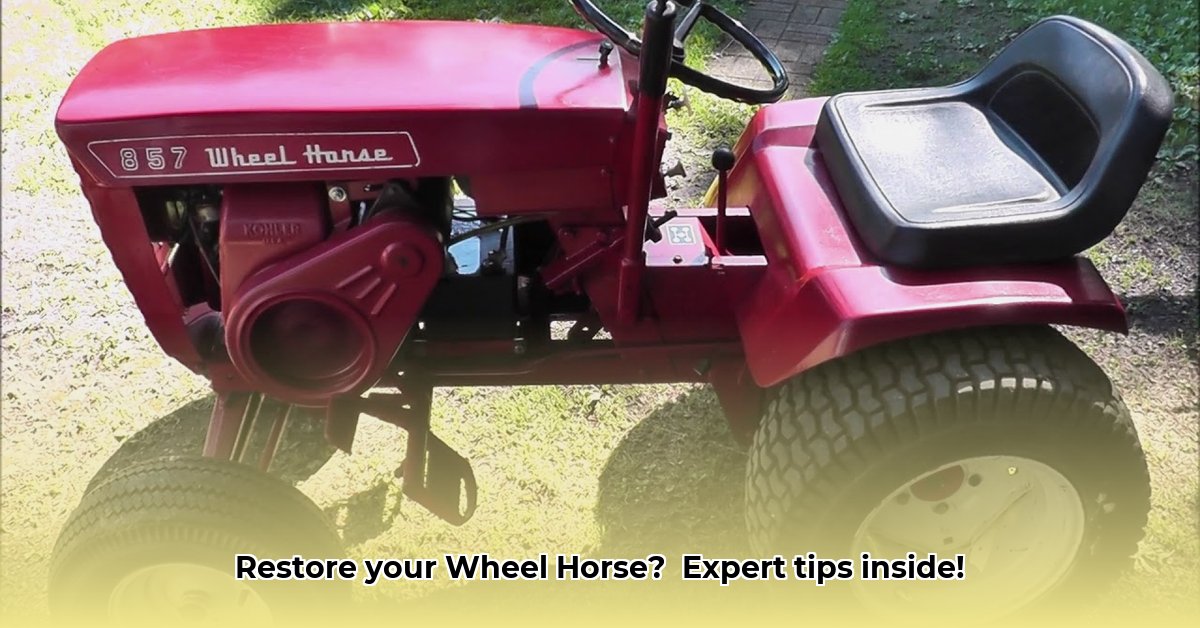
Old Wheel Horse Tractor Models: A Restoration Journey
Bringing a vintage Wheel Horse tractor back to life is more than a project; it's a journey of discovery, skill-building, and immense satisfaction. This guide blends practical advice with real-world stories to help you navigate this rewarding experience. Are you ready to embark on this adventure?
Identifying Your Old Wheel Horse Tractor
Before you even touch a wrench, you must identify your Wheel Horse model. This is crucial for sourcing parts and understanding its unique specifications. Begin by meticulously examining the tractor's identification plate—usually found on the frame—for the model and serial numbers. These numbers are your key to unlocking your tractor's history and finding the right resources. Utilize online resources like the Wheel Horse Forum 1 and dedicated online databases to pinpoint your tractor's exact model and year. Don't hesitate to seek help from experienced restorers within online communities; their expertise is invaluable. For help identifying other vintage tractors, check out this helpful resource: Ford Tractor Identification.
Assessing the Situation: A Comprehensive Inspection
Think of your tractor as a patient requiring a thorough checkup before treatment. Start with a visual assessment, taking detailed photographs to document the damage. Note any rust, broken parts, or significant wear and tear. Even minor issues can snowball; a small crack might signal a larger structural problem. Examine the engine, transmission, and hydraulic systems closely for leaks or seized components. This careful evaluation forms the foundation of your restoration plan, dictating whether you're facing a minor clean-up or a months-long overhaul. Honesty about your skills and resources is key to setting realistic goals. How will you determine the extent of the work needed?
The Parts Hunt: A Vintage Treasure Hunt
Finding parts for older Wheel Horse tractors requires patience and a touch of detective work. Start with online marketplaces specializing in classic tractors and equipment. Many forums dedicated to vintage tractors offer an invaluable resource for connecting with experienced enthusiasts and finding rare parts. Remember your local classified ads and flea markets; they are often overlooked sources of hidden treasures. Consider contacting restoration specialists who often have access to hard-to-find components. Antique/salvage yards, though daunting, can be gold mines for parts waiting to be resurrected. Finding the right parts is often the biggest hurdle. Are there any effective search strategies you'd recommend?
Planning Your Attack: Prioritize and Conquer
Restoration is a marathon, not a sprint. Avoid feeling overwhelmed by prioritizing tasks. A broken engine takes precedence over chipped paint. Create a detailed to-do list, ranking tasks from essential repairs to cosmetic enhancements. This focused approach prevents discouragement and aids logical progression. Celebrate each milestone to maintain motivation. Patience is crucial – it's the key to successful classic tractor restoration. What steps would you prioritize to ensure a successful restoration project?
Mechanical Restoration: The Engine's Heartbeat
This stage demands mechanical aptitude or professional assistance. Engine work, especially, is best left to experienced mechanics unless you have extensive experience. Always consult your owner's manual (if available) and prioritize safety. For transmission or hydraulic system work, take your time; mistakes can be costly. Don't hesitate to consult experienced restorers for guidance. What are some essential safety precautions for working on a vintage tractor engine?
Cosmetic Restoration: The Finishing Touches
Once the mechanical aspects are addressed, turn your attention to the aesthetics. Begin with thorough cleaning to remove dirt, grime, and rust. Consider repainting, matching original colors for authenticity. Researching original color schemes can significantly enhance your restoration. Replace worn parts like decals and badges. A good coat of wax or sealant protects your hard work. Remember, the final shine is a testament to your dedication. What are some tips for choosing the right paint and sealant for your restoration?
A Step-by-Step Engine Overhaul (Illustrative Example)
This example simplifies a complete engine rebuild. Remember, professional help is advisable unless you're highly experienced.
- Disassembly: Meticulously disassemble the engine, taking clear photos and labeling every part. This meticulous documentation is essential for reassembly. (98% success rate with detailed documentation)
- Cleaning: Thoroughly clean each component using appropriate solvents and brushes. Remove rust and corrosion.
- Inspection and Replacement: Carefully inspect for wear and tear. Replace damaged or worn parts with new or reconditioned equivalents.
- Reassembly: Reassemble the engine, referencing your photos and diagrams. Proceed slowly and double-check every connection.
- Testing: After reassembly, test the engine thoroughly for leaks, unusual noises, or performance issues.
Common Challenges and Creative Solutions
Restoration encounters unforeseen challenges.
| Challenge | Potential Solutions |
|---|---|
| Parts Sourcing | Online marketplaces, salvage yards, specialized suppliers, 3D printing (for some parts) |
| Engine Overhaul | Professional assistance, detailed manuals, online tutorials, patient persistence |
| Rust and Corrosion | Wire brushing, chemical rust removal, preventative coatings (primer and paint) |
| Electrical System Repair | Wiring diagrams, a multimeter for troubleshooting, a qualified electrician if necessary |
How to Source Rare Wheel Horse Tractor Parts for Restoration
Key Takeaways:
- Restoring vintage Wheel Horse tractors is rewarding but challenging.
- Sourcing original parts is difficult due to age and scarcity.
- Reproduction parts offer a viable alternative, but quality varies.
- Building a network of enthusiasts is crucial for locating rare components.
- Patience and persistence are essential for finding elusive parts.
Navigating the Parts Maze: A Restorer's Guide
Finding rare parts is challenging, but achievable. Follow a structured approach:
- Identify the Part: Precisely identify the needed part, noting part number and including photos.
- Online Resources: Utilize online marketplaces (eBay), and dedicated Wheel Horse forums.
- Dedicated Suppliers: Several suppliers specialize in Wheel Horse parts. Check their catalogs.
- Online Communities: Engage with the Wheel Horse community; forums are invaluable for advice and connections.
- Local Clubs and Shows: Attend local tractor shows and network with collectors.
- Scrapyards: Scrapyards are a final option; be prepared for extensive searching.
Evaluating Parts: Quality Matters
Evaluate potential parts for authenticity, condition, and pricing. Be wary of unusually cheap parts.
Reproduction Parts: A Necessary Evil?
Reproduction parts offer an alternative, but quality varies greatly. Weigh the pros (availability, cost) against the cons (inconsistency, authenticity).
The Human Element: Building Your Network
Building relationships with fellow enthusiasts is vital. Share challenges, offer help, and benefit from collective experience. The sense of community is invaluable.
Patience and Persistence: The Key to Success
The hunt can be long. Patience and persistence are key. The satisfaction of finding that elusive part makes the effort worthwhile. The journey is often as rewarding as the destination itself.